Introduction
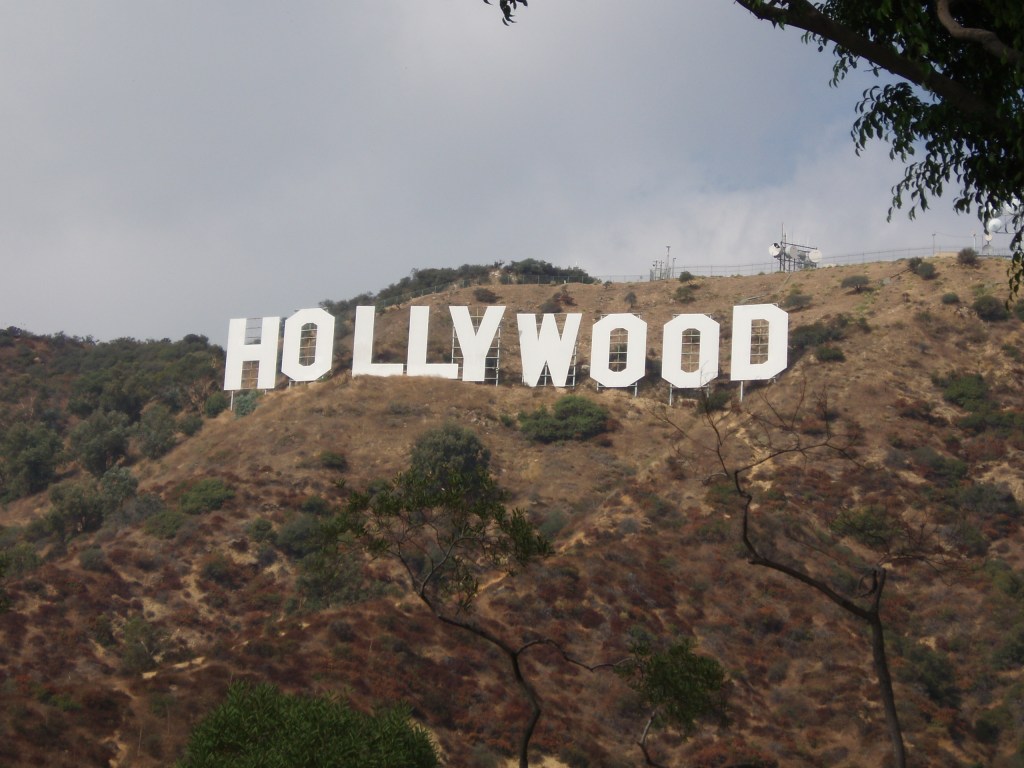
Today, the United States is the most important cultural center in the world. Hollywood has an 80-90% market share of the global film industry and animation studios such as Marvel and Disney. For music, America is also the birthplace of jazz, modern music, rock and roll, country music, and many other kinds of music.
However, in recent years, with the rise of other countries, especially from Asian countries and have a long history with new global ambitions, the global media and cultural hegemony of America have been challenged unprecedentedly. (Thussu, 2014) This assignment will discuss what America’s media hegemony is and how the rise of media in other countries has gradually shaken it.
America’s global media and culture hegemony
Since the end of the 20th century, America has influenced the world and touched all areas of the world. This has strengthened the U.S.’s hegemonic position and enriched the U.S.’s hegemonic thinking. America has always dominated the media industry. For example, Google, 21st Century Fox, The Walt Disney Company, and Time Warner are the top media companies that dominate American and global media. Currently, the United States accounts for one-third of the global media and entertainment industry, and Hollywood movies are currently one of the most popular media export products. Although their film production is not the highest, its global storyline, extensive distribution, and marketing help it to obtain the highest income. (Mishra & Kern-stone, 2019)
Now cultural hegemony has become an important issue, and it can become an essential factor influencing the economy and technology. America has turned media globalization into Americanization. It is the largest producer of mass cultural products. For the United States, media hegemony has made the entertainment industry one of the most critical areas of economic activity. Apart from the commercial and aerospace industries, the U.S. entertainment industry gets more profit from overseas sales than other industries. According to Kasiyarno(2014), as soft power, some American experts believe that cultural globalization is the most powerful engine for spreading American cultural values and shaping global civilization. The spread of American popular culture is very rapid. According to the Globalization101 organization, despite the Canadian government’s efforts to protect its own culture, American cultural products still dominate. (Maatougui, 2013)
Korean wave
Hallyu refers to the phenomenon of the Korean culture economy exporting popular culture, entertainment, music, T.V. series, and movies to the world. In the past two decades, Hallyu has continued to develop. Especially in the past five years, K-pop has exerted an increasing influence on the global audience.
In China, globalization is more tend to Koreanization. Since 1997, Korean T.V. dramas, music, movies, fashion, food, and beauty are all trendy in China. The popularity of the Korean Wave in China is the only example that people think threatens American culture’s dominance. (Park,2017)
- K-pop music
The export of Korean pop music has rapidly developed the Korean music industry, reaching an astonishing $5 billion industry. The Korean music industry has perfected the production of music into a passionate assembly line, with high-quality performances (especially dance), extremely exquisite aesthetics, and “in-house” studio producers, making Korean pop stars singing, Comedy, rap, dance, social commentary, and other aspects are excellent. (Romano,2018)
In recent years, Hallyu has been popular in Asia and has successfully occupied a vital position in the world. Twice’s “Likey” got over 100 million views on YouTube, “Gangnam Style” has more than 3 billion views on YouTube, once becoming the most viewed video in the history of the platform, but it was replaced in 2017.
Based on the Twitter’s year-end data, there were few moments on the site in 2017 that were not about K-pop boy groups, the 2017 music on Twitter is indeed dominated by Korean artists such as EXO and BTS. (Herman,2017) BTS is the most popular Korean pop group in the world. In 2017, their two songs on the Billboard Top 100 singles list, on the cover of the “Billboard” magazine, and even participated in the New Year’s Eve performance in Times Square, successfully entered the American culture.
- K-drama
In the past, Korean dramas were not very popular because they did not have English subtitles. The largest Korean drama platform in North America and South America, DramaFever, has solved this problem, making Korean dramas gradually popular all over the world. More than 2 million active users already use DramaFever to watch 40 hours of content each month.
According to the Korea Creative Content Agency (2014), there have 18 million American fans of Korean dramas. More than 35.9 percent were aged 16 to 20, probably the same group of people who promoted the rise of Korean pop music and led Korean skincare trends in North America.
Indian movies are booming around the world.
In recent years, Indian movies have attracted millions of people worldwide, and this number will continue to grow. Especially in the U.S. and Canadian markets, their influence and income have overgrown in the past few years. Indian films feature appealing global superstars, coupled with the support of affluent studios, and have gained millions of box office sales worldwide. According to CNBC (2018), the Indian film industry grew by 27% in 2017 and may reach $411 million by 2020. The increase in overseas box office income has also promoted the development of the Indian tourism industry, created new employment opportunities, and added value to the Indian economy through taxation. According to Cain’s report (2017), Indian movies are popular in America now, and this is based on changes in the demographic structure of North America, changes in the Indian market, and the viewing trend of Indian movie audiences, which has resulted in rapid growth in the influence and income of Indian films. In recent years, Indian Americans, one of the fastest-growing groups in America, have had a massive impact on the Indian film industry, with a successful Indian film in North America accounting for 10% or more of its global box office receipts.
Bollywood
India produces 1,500 to 2,000 films each year, making it the country with the largest number of films worldwide. The Indian film industry, headquartered in Mumbai, is also known as Bollywood. There is a growing audience of Indian movies around the world, and the role of Bollywood actors in Hollywood continues to grow. (Bhattacharjee, 2019)
Bollywood films’ popularity in China
As early as 1980, China introduced the Indian Bollywood film-Caravan, which has achieved great success in China and opened the door to other Indian films. Some Bollywood stars also gained many loyal fans in China. For example, Amir Khan, who appeared in 3 Idiots and Dangal, has achieved good box office results in China. Dangal is currently the highest box office Indian movie in China, with a box office of $183.3 million in China(mainland), which is more than twice as the local box office. He also served as an informal cultural ambassador between India and China, hoped to help “improve India-China relations and make foreign audiences more interested in understanding India.” Even in 2019, the Indian Embassy in Beijing announced that it has dramatically relaxed the e-visa policy for Chinese citizens, and leaders of the two countries held informal summits and other news. On the whole, India’s media culture can not only bring benefits but also enhance relations with other countries. (Bi, 2019)
Japanese pop media culture
Many years ago, Japan acquired an empire through durable military power and intelligent trade contracts. However, in the development of history, the country is no longer the same as before. It occupied the world in a different way-popular culture. Today, the influence of Japanese pop culture is most prominent in areas and technologies like film, animation, television, music, fashion, and manga.
Japanese animation
Over the past two decades, Japanese anime has entered mainstream American culture, further promoting its popularity. Famous cartoons such as “Sailor Moon,” “Dragon Ball,” and the most critical ” Pokémon” have influenced American young people’s love for anime. “It is estimated that Japanese animation has taken up 60% of the world’s animation, audiences can Know a lot about Japanese people and culture, which attracts people who want to know more and therefore visit Japan.
Artistic style is another reason of why Japanese animation’s popular. The style of Japanese animation is unique. Characters usually have big eyes and different hairstyles. In order to compete with Japanese rivals, many American production companies have adjusted their production styles, such as “The Legend of Korra.” (Japan INFO, 2015)
Japanese game
The “Pokémon” series is one of the most critical channels for Japanese popular culture to pass to the West. It has a large number of loyal audiences and breaks the cultural barriers between Japanese media and American consumers. As early as the late 1990s, Pokémon became famous all over the world. Now that 20 years have passed since the birth of “Pokémon,” it has not fallen. (Finnegan, 2016)
Pokémon has been released for 24 years. During these 24 years, the Pokémon series has been updating its video games, T.V. series, movies, comics, and a large number of goods. Their effectiveness and sustainability are “unprecedented.”. According to Nintendo’s 2015 report, they sold more than 277 million video games around the world, with 69.95 million movie viewers, exceed 21.5 billion cards sold in 11 different languages to 74 different countries, and a T.V. show in 93 Broadcast in different countries and regions. Since landing in the United States in 1998, Pokémon appeared in the parade of Macy’s Thanksgiving Day and owned a store for it in New York. In 1999, Pokémon, on the cover of Time magazine and appeared in dozens of other T.V. series such as “The Simpsons” and “South Park,” Pokémon has become the central element of American popular culture. (Grubb, 2016)
Pokémon G.O. is one of the most successful mobile games around the world, breaking records in its first month of release, making it the fastest $100 million game in the world and the most downloaded. So far, it has generated nearly $2 billion in revenue and been downloaded 800 million times. It is also one of the most critical games in the world, and its success will have a significant impact on the design of augmented reality games for years to come. (Chamary, 2018)
Conclusion
Overall, the media and cultural hegemony of America are still deeply rooted in the hearts of people worldwide, and it still ranks first in terms of film, television, media, and other aspects. However, with the rapid development of Asia and other countries with a long history in recent decades, the Hegemony of America has been challenged in every aspect, including film, television, culture, and music. This picture of nations striving for development is what people want to see, both for the development of nations and for the development of the world. In the face of so many challenges from other countries, America will continue to develop and strengthen its hegemony, while other countries will also strive to rise and gain a place.
reference
Bhattacharjee, M 2019, ‘3 ways Bollywood can help shape the future of globalization’, world economic forum, retrieved 31 May 2020, < https://www.weforum.org/agenda/2019/01/how-can-bollywood-shape-the-future-of-globalization/>
Bi, MY 2019, ‘Bollywood films’ popularity in China opening door for cultural exchange’, Global Times, retrieved 31 May 2020,< https://www.globaltimes.cn/content/1166842.shtml>
Cain, R 2017, ‘Indian Movies Are Booming In America’, Forbes, retrieved 26 May 2020,< https://www.forbes.com/sites/robcain/2017/05/05/these-are-the-best-of-times-for-indian-movies-in-america/#b3120642b97e>
Chamary, JV 2018, “Why ‘Pokémon G.O.’ Is The World’s Most Important Game”, Forbes, retrieved 29 May 2020,< https://www.forbes.com/sites/jvchamary/2018/02/10/pokemon-go-science-health-benefits/#9eb13773ab0b>
Finnegan, L 2016, “How Pokemon Became a Pop Culture Sensation in America”. The Escapist, retrieved 31 May 2020,< https://v1.escapistmagazine.com/articles/view/video-games/15498-How-Pokemon-Became-a-Lasting-Pop-Culture-Phenomenon-in-America>
Grubb, J 2016, “Why Pokémon still matters 20 years later”, venturebeat, retrieved 31 May 2020,< https://venturebeat.com/2016/08/09/why-pokemon-still-matters-20-years-later/>
Herman, T 2017, ‘BTS And Other K-Pop Boy Bands Dominated Twitter In 2017’, Forbes, retrieved 26 May 2020, < https://www.forbes.com/sites/tamarherman/2017/12/05/bts-other-k-pop-boy-bands-dominated-twitter-in-2017/#39b41ccd1002>
Japan INFO 2015, “How Has Japanese Anime Influenced the World?”retrieved 31 May 2020,< https://jpninfo.com/31964>
Kasiyarno, K 2014, ‘American Dream: the American Hegemonic Culture and Its Implications to the World’, Humaniora, Vol. 26, No. 1, retrieved 2 June 2020, < https://media.neliti.com/media/publications/11573-ID-american-dream-the-american-hegemonic-culture-and-its-implications-to-the-world.pdf>
Maatougui, L 2013, The American Cultural Hegemony as a process of Globalization, Literature and Civilization, retrieved 5 June 2020, < https://pdfs.semanticscholar.org/14c5/a9f11cbf249aa1a449fe1e15e69028f58f72.pdf>
Mckevitt, AC. 2010,”You Are Not Alone!”: Anime and the Globalizing of America, Diplomatic History. 34 (5): 893–921. doi:10.1111/j.1467-7709.2010.00899.x.
Orsini, L 2018, ‘Korean Media Hits The Big Time In North America’, Forbes, retrieved 26 May 2020,< https://www.forbes.com/sites/laurenorsini/2018/01/08/korean-media-hits-the-big-time-in-north-america/#5d8e80376be2>
Park, S 2017, ‘KOREAN HALLYU THREATENS AMERICAN CULTURAL DOMINANCE’, Pacific Standard, retrieved 1 June 2020, < https://psmag.com/social-justice/korean-hallyu-threatens-american-cultural-dominance-98071>
Romano, A 2018, ‘How K-pop became a global phenomenon’, VOX, retrieved 1 June 2020, <https://www.vox.com/culture/2018/2/16/16915672/what-is-kpop-history-explained>
The korea times, 2014, ‘About 18 million Americans enjoy K-dramas: Korea Creative Content Agency’, The korea times, retrieved 27 May 2020,< http://www.koreatimesus.com/about-18-million-americans-enjoy-k-dramas-korea-creative-content-agency/>
Thussu, D 2014, De-Americanising soft power discourse, CPD Perspectives on Public Diplomacy, retrieved 25 May 2020, <https://www.uscpublicdiplomacy.org/sites/uscpublicdiplomacy.org/files/useruploads/u20150/CPDPerspectives2_2014_SoftPower.pdf>
Transnational Media : Concepts and Cases, edited by Suman Mishra, and Rebecca Kern-Stone, John Wiley & Sons, Incorporated, 2019. ProQuest Ebook Central, <http://ebookcentral.proquest.com/lib/deakin/detail.action?>
 My story behind pictures.